
If you are a foreign company planning to hire employees or operate in the Philippines, payroll and compliance are two of the most critical areas you need to get right.
The Philippines has a structured but complex regulatory system that governs employment, taxation, and statutory contributions. Without the right setup, you risk delays, penalties, or legal exposure.
This guide explains how payroll and compliance work in the Philippines, what your obligations are as a foreign company, and how you can manage everything efficiently from day one.
Understanding Payroll in the Philippines
Payroll in the Philippines goes beyond simply paying salaries. It involves calculating wages, withholding taxes, and remitting contributions to multiple government agencies.
As an employer, you are responsible for ensuring that all payroll processes are accurate and compliant with local laws.
Key Components of Payroll
Payroll in the Philippines typically includes:
• Basic salary, which is agreed upon in the employment contract and must comply with minimum wage regulations depending on the region.
• Mandatory deductions, including income tax and government contributions that must be withheld from employee salaries.
• Employer contributions, which are additional payments you must make on top of employee salaries.
• Statutory benefits, such as 13th month pay, which is legally required for all rank-and-file employees.
Each of these components must be calculated correctly and reported on time to avoid penalties.
Mandatory Government Contributions

Employers in the Philippines must register with and contribute to several government agencies. These contributions are a core part of payroll compliance.
Required Contributions
You must account for the following:
• Social Security System (SSS), which provides retirement, disability, and sickness benefits to employees.
• PhilHealth, which covers healthcare benefits for employees.
• Pag-IBIG Fund, which supports housing and savings programs.
Both employer and employee contributions are required, and failure to remit them on time can result in fines and legal issues.
Tax Compliance and Withholding
In addition to contributions, employers must handle income tax withholding.
Employer Responsibilities
As a foreign company operating in the Philippines, you must:
• File monthly and annual tax reports with the Bureau of Internal Revenue (BIR).
• Withhold income tax from employee salaries based on progressive tax rates.
• Issue tax documents such as BIR Form 2316 to employees annually.
Tax compliance is strictly enforced, and errors or delays can trigger audits or penalties.
Employment Laws You Need to Follow
Payroll compliance is closely tied to labor law compliance in the Philippines.
Key Labor Requirements
You must ensure that your payroll practices align with local labor laws, including:
• Minimum wage compliance, which varies by region and industry.
• Overtime pay, which must be calculated correctly for hours worked beyond the standard schedule.
• Holiday pay and premium pay, which apply during regular and special non-working holidays.
• 13th month pay, which must be paid on or before December 24 each year.
These requirements are non-negotiable and must be reflected accurately in your payroll system.
The Compliance Challenge for Foreign Companies
For foreign companies, payroll and compliance in the Philippines can quickly become overwhelming.
You are dealing with multiple agencies, evolving regulations, and local nuances that are not always clearly documented.
Common Challenges
Foreign companies often face issues such as:
- Navigating unfamiliar government processes and requirements.
- Managing multiple providers for accounting, payroll, and legal compliance.
- Understanding local labor laws and avoiding misclassification risks.
- Keeping up with filing deadlines and regulatory changes.
Without local expertise, even simple payroll tasks can become time-consuming and error-prone.
Two Ways to Handle Payroll and Compliance in the Philippines
As a foreign company, you generally have two options for managing payroll and compliance.
1. Set Up Your Own Company
You can establish a legal entity in the Philippines and run payroll internally.
This option gives you full control but also comes with significant responsibilities.
• You must complete company registration with the SEC and other government agencies.
• You are responsible for setting up payroll systems, accounting, and compliance processes.
• You must handle ongoing filings, tax compliance, and labor law requirements.
This approach is best if you are building a long-term presence in the Philippines and want full operational control.
With Comply.ph, everything from company setup to payroll and compliance is handled for you, including accounting and ongoing filings.
2. Hire Employees Without Setting Up a Company
If you want to hire quickly without establishing a local entity, you can use an Employer of Record (EOR) model.
This allows you to legally employ workers in the Philippines while a local partner handles compliance.
• Your team is legally employed on your behalf.
• Payroll, taxes, and statutory contributions are fully managed.
• You avoid employment liability and misclassification risks.
• You can scale your team without dealing with entity setup.
Comply.ph provides the EOR service, allowing you to hire full-time employees while they handle payroll, taxes, and compliance end to end.
Why Compliance Matters More Than You Think
Payroll mistakes are not just administrative issues. They can lead to serious legal and financial consequences.
Risks of Non-Compliance
If you fail to comply with payroll and labor regulations, you may face:
• Government penalties and fines for late or incorrect filings.
• Legal disputes with employees due to incorrect pay or benefits.
• Business disruptions caused by audits or investigations.
• Reputational damage that affects your ability to hire locally.
Compliance is not optional. It is a fundamental part of operating in the Philippines.
How Comply.ph Simplifies Payroll and Compliance
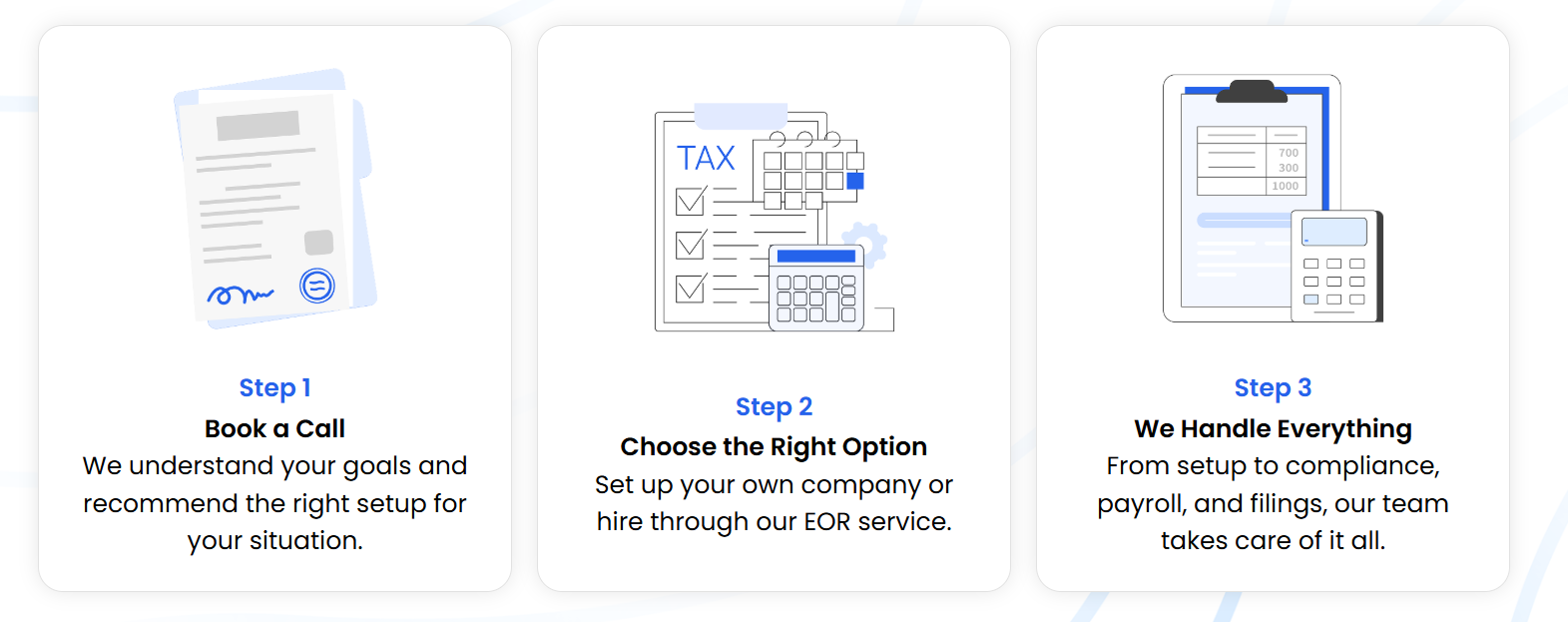
Managing payroll and compliance does not have to be complicated.
Comply.ph is built specifically to help foreign founders operate in the Philippines without dealing with fragmented systems or unclear processes.
What Makes It Different
Instead of juggling multiple providers, you get a single, structured solution:
• Everything is handled in one place, from legal setup to payroll and ongoing compliance.
• A dedicated team of specialists manages accounting, HR, payroll, and compliance.
• You avoid dealing directly with government offices and unclear requirements.
• You reduce the risk of fines, delays, and costly mistakes.
Designed for Foreign Companies
Comply.ph focuses exclusively on helping foreign founders and companies operate in the Philippines.
This means:
• You are working with a team that understands local systems in depth.
• You get guidance tailored to your specific business goals.
• You can choose the setup that fits your needs, whether it is full company formation or hiring without an entity.
Choosing the Right Approach for Your Business
There is no one-size-fits-all solution when it comes to payroll and compliance.
Your decision depends on your business goals, hiring timeline, and level of control you want.
Consider These Factors
When deciding how to proceed, think about:
• Whether you plan to build a long-term presence in the Philippines or hire quickly for short-term needs.
• Your internal capacity to manage payroll, compliance, and legal requirements.
• Your risk tolerance when it comes to employment liability and regulatory exposure.
• How quickly you need to onboard employees and start operations.
Comply.ph helps you evaluate these factors and choose the right path based on your situation.
Final Thoughts
Payroll and compliance in the Philippines are essential but complex aspects of running a business as a foreign company.
From tax withholding and government contributions to labor law requirements, every detail matters. Mistakes can lead to fines, delays, and legal complications.
The key is to approach payroll and compliance with a clear structure and the right local expertise.
Whether you choose to set up your own company or hire employees without one, having a reliable system in place ensures that you stay compliant and focused on growing your business.
Book a call with us and we’ll guide you through the best setup based on your goals.